Starry Sky Projector Instructions: A Comprehensive Guide (Updated 03/31/2026)
Welcome! This guide provides detailed instructions for your new starry sky projector, a fantastic novelty item․ It’s perfect for kids and space enthusiasts,
transforming any room into a captivating cosmic experience․

What is a Starry Sky Projector?

A starry sky projector is a device designed to simulate a night sky filled with stars, constellations, and often, nebulas, within an indoor environment․ These projectors utilize a combination of light sources, lenses, and rotating mechanisms to cast these celestial patterns onto ceilings and walls․
Unlike traditional projectors that display images from a video source, starry sky projectors focus on recreating the ambiance of a clear night sky․ They typically employ LEDs to produce various colors, often including blues, greens, and reds, which can be combined to create a wide spectrum of cosmic hues․ Many models also incorporate a rotating base, causing the projected stars to move and twinkle, enhancing the realism․
The Astronaut Starry Sky Star Projector, as an example, is a popular novelty item, particularly appealing to children and space enthusiasts․ These devices aren’t intended for high-fidelity astronomical accuracy but rather for creating a relaxing and immersive atmosphere․ They offer a convenient and affordable way to bring the wonder of the universe into your home, bedroom, or any space where a calming and visually appealing environment is desired․
Essentially, a starry sky projector is a decorative lighting solution that transforms a room into a personal planetarium․
Types of Starry Sky Projectors
Starry sky projectors come in a diverse range of designs and functionalities, catering to different preferences and budgets․ Astronaut-style projectors, like the popular model mentioned, are a common choice, often featuring a unique aesthetic and a detachable dome for varied projection effects․
Traditional dome projectors offer a classic planetarium experience, projecting stars onto a hemispherical surface․ Laser star projectors utilize laser technology for brighter and more defined star patterns, though safety precautions are crucial with these models․ LED projectors are the most prevalent, offering energy efficiency and a wide array of color options․
Some projectors include built-in Bluetooth speakers, allowing you to pair your device and play ambient music to complement the visual experience․ Others feature timer functions for automated shut-off, ideal for use as a night light․ Nebula projectors go beyond stars, simulating the swirling colors and shapes of nebulas for a more dynamic display․
The complexity and features vary significantly, from simple, single-color star projectors to advanced models with multiple projection modes, adjustable brightness, and remote control functionality․ Choosing the right type depends on your desired aesthetic and intended use․
Unboxing and Component Check
Carefully unpack your starry sky projector from its packaging, ensuring you have ample space to avoid accidental damage․ Retain the original packaging for potential future returns or storage; Begin by verifying the contents against the included parts list – typically found within the user manual or on a separate insert․
Essential components usually include the projector unit itself, a power adapter (USB or wall plug), and a remote control (if applicable)․ Astronaut-style projectors will also have a detachable dome․ Inspect each component for any visible signs of damage, such as cracks, dents, or loose connections․
Check the power adapter for the correct voltage and plug type for your region․ Test the remote control by inserting batteries (usually AAA, not included) and attempting basic functions like power on/off․ If any components are missing or damaged, immediately contact the retailer or manufacturer for assistance․ Do not attempt to operate a damaged projector․
Familiarize yourself with the layout of the projector unit, identifying the control buttons, power port, and any other relevant features․ A thorough component check ensures a smooth setup process and prevents potential issues later on․
Power Source Options
Starry sky projectors offer versatile power solutions to suit various setups․ The most common method is utilizing a USB power adapter, often included in the package․ This allows connection to a standard wall outlet via USB, providing consistent power․ Alternatively, many projectors can be powered directly from a USB port on a computer, laptop, or power bank․
USB power banks are excellent for portability, enabling use in bedrooms, camping trips, or anywhere without a readily available outlet․ Ensure the power bank provides sufficient amperage (typically 5V/1A or 5V/2A) for optimal performance․ Some models feature a dedicated DC power input, requiring a specific voltage adapter – check your projector’s specifications․
Avoid using adapters with incorrect voltage, as this could damage the projector․ Wireless charging is a less common feature, but some newer models support it․ Always prioritize using the provided power adapter for the best and safest operation․ Consider the convenience and accessibility of each power option when choosing the best solution for your needs․
Setting Up Your Projector: Initial Placement
Proper placement is crucial for maximizing your starry sky projector’s impact․ Begin by selecting a stable, flat surface – a bedside table, shelf, or floor are ideal․ Consider the ceiling height; lower ceilings will create a more concentrated projection, while higher ceilings will spread the stars further․ Experiment with different angles to find the optimal coverage for your room․
Avoid placing the projector directly against a wall, as this can distort the projection․ Allow at least one to three feet of space behind the unit for clear projection․ For astronaut-style projectors, the adjustable head allows for directional control, so aim it towards the desired area․ Think about the room’s layout and potential obstructions, like furniture or lamps․
Initial testing should be done in a darkened room to assess the projection quality․ Adjust the projector’s position until you achieve the desired effect․ Remember, subtle adjustments can significantly impact the overall experience․ Secure the power cable to prevent accidental tripping or damage․
Connecting to Power
Before connecting your starry sky projector to a power source, ensure the voltage indicated on the projector’s base matches your local electricity supply․ Most projectors utilize a standard USB power connection, offering versatility in power options․ You can power the device using a USB wall adapter (typically a 5V/2A adapter is recommended – not always included), a computer’s USB port, or a portable power bank․
Carefully insert the USB cable into the designated port on the projector․ If using a wall adapter, plug it into a functioning electrical outlet․ Avoid using damaged or frayed USB cables, as this poses a safety hazard․ Confirm a secure connection by gently tugging on the cable․ A small indicator light on the projector usually illuminates to confirm power is being received․
For projectors with a built-in power adapter, plug the adapter directly into the projector and then into the wall outlet․ Always disconnect the projector from the power source before cleaning or performing maintenance․ Never force the power cable into the port․
Understanding the Control Buttons

Most starry sky projectors feature a set of physical buttons located on the device itself, offering direct control over its functions․ Typically, a power button initiates or terminates the projection․ A ‘Mode’ button cycles through different lighting effects – stars only, nebula only, or a combination of both․ Look for buttons labeled ‘Brightness’ or ‘+’ and ‘-’ to adjust the intensity of the projected light․
Some projectors include a ‘Speed’ button to control the movement of the nebula effect, allowing you to choose between a slow, gentle drift or a faster, more dynamic display․ A dedicated button might activate or deactivate the Bluetooth speaker function, if your model includes one․ Familiarize yourself with the button layout before operation․
Pressing buttons usually results in an immediate change in the projection․ Refer to the projector’s diagram (often found in the manual) for precise button locations and functions․ Experiment with the buttons to discover all the available settings and create your desired ambiance․
Remote Control Functionality
Many starry sky projectors include a remote control, offering convenient operation from a distance․ The remote typically duplicates all the functions available on the projector’s physical buttons – power, mode selection, brightness adjustment, and speed control․ However, remotes often provide additional features not accessible directly on the device․
Look for dedicated buttons for timer settings, allowing you to automatically shut off the projector after a specified period (e․g․, 30, 60, or 90 minutes)․ Some remotes feature preset color combinations or scene modes for quick access to popular lighting effects․ A ‘Music Sync’ button might enable the projector to pulse its lights in time with music played through the Bluetooth speaker․
Before using the remote, ensure it has fresh batteries installed․ Point the remote directly at the projector’s receiver for optimal performance․ Keep the remote in a safe place to avoid misplacement․ Explore all the remote’s functions to fully customize your starry sky experience․
Adjusting Brightness and Speed
Controlling the brightness and speed of your starry sky projector is key to creating the perfect ambiance․ Most projectors offer multiple brightness levels, ranging from a subtle, relaxing glow to a vibrant, immersive display․ Experiment with different settings to find what suits your preference and the size of the room․
The speed control adjusts the rate at which the projected stars and nebula clouds move․ A slower speed creates a calming, gentle effect, ideal for bedtime or meditation․ Increasing the speed adds dynamism and energy, suitable for parties or lively atmospheres․ Some projectors offer a static mode, freezing the projection for a fixed starry scene․
Brightness and speed adjustments are typically made using buttons on the projector itself or via the remote control․ Gradual adjustments are often preferable to sudden changes, allowing for a smoother transition․ Consider the room’s darkness when setting brightness – a darker room requires lower brightness levels․
Color Mode Selection
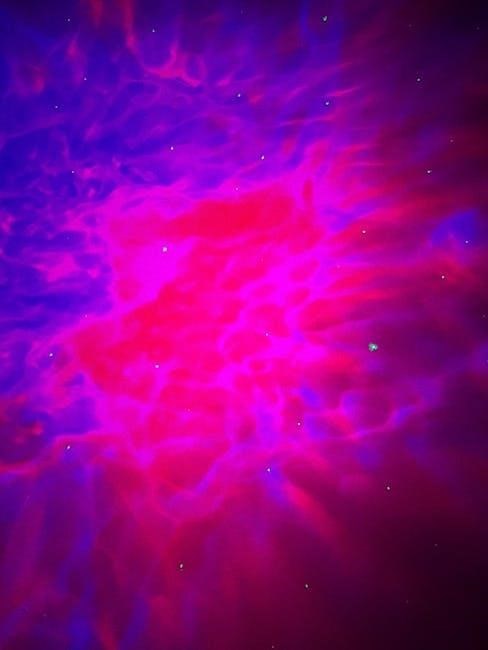
Starry sky projectors frequently boast a variety of color modes, significantly enhancing the visual experience․ These modes typically allow you to cycle through different nebula colors – blues, reds, greens, and purples are common – or combine them for a dynamic, multi-colored display․ Some projectors offer a single-color mode, focusing solely on a chosen hue for a more minimalist aesthetic․
Experimenting with color modes is encouraged to discover the perfect atmosphere for any occasion․ A calming blue can promote relaxation, while a vibrant mix of colors can energize a room․ Certain models include a breathing effect, subtly shifting colors for a more natural, organic feel․ The color selection often impacts the overall mood and ambiance created by the projector․
Color mode selection is usually controlled via buttons on the projector or the remote control․ Refer to your projector’s manual for specific instructions on navigating the available options․ Consider the room’s décor when choosing colors to create a harmonious visual environment․
Projection Distance and Focus
Achieving the optimal projection relies heavily on understanding projection distance and focus adjustments․ Generally, a greater distance will result in a larger, but potentially less sharp, image․ Conversely, a shorter distance yields a smaller, more focused projection․ Experimentation is key to finding the sweet spot for your room size and desired effect․
Most starry sky projectors feature a focus adjustment ring or dial․ Slowly rotate this component while observing the projected image until the stars and nebula appear crisp and clear․ Blurriness often indicates the focus is not correctly set․ Pay attention to the edges of the projection; they should be well-defined, not fuzzy․
Consider the ceiling height when determining the ideal distance․ Higher ceilings require a greater projection distance to fill the space effectively․ Adjusting both distance and focus in tandem will produce the most visually stunning results․ A well-focused projection dramatically enhances the immersive experience․
Optimizing Room Darkness
To truly maximize the impact of your starry sky projector, optimizing room darkness is crucial․ These projectors work best in environments with minimal ambient light․ Even a small amount of light can significantly diminish the visibility of the projected stars and nebula effects, reducing the immersive experience․
Begin by turning off all overhead lights․ Consider using blackout curtains or blinds to block external light sources, such as streetlights or moonlight․ If complete darkness isn’t achievable, try to minimize light pollution as much as possible․ Darker walls will also enhance the contrast and vibrancy of the projection․
Experiment with different levels of darkness to find what works best for your projector and room․ Some projectors have adjustable brightness settings that can compensate for slight ambient light․ However, a truly dark room will always deliver the most spectacular and realistic starry sky simulation․ Enjoy the cosmos!
Troubleshooting Common Issues: No Power
If your starry sky projector isn’t powering on, begin with the basics․ First, ensure the power adapter is securely plugged into both the projector and a functioning wall outlet․ Test the outlet with another device to confirm it’s providing power․ Next, inspect the power cable for any visible damage, such as fraying or cuts․
If using batteries, verify they are installed correctly, with the proper polarity (+ and -)․ Replace the batteries with a fresh set, even if the current ones seem to have some charge․ Some projectors have a separate on/off switch in addition to the power connection; ensure this switch is in the ‘on’ position․
If the issue persists, check the projector’s fuse (if applicable)․ Consult the user manual for instructions on locating and replacing the fuse․ As a final step, try a different power adapter if available․ If none of these steps resolve the problem, contact customer support for assistance․

Troubleshooting Common Issues: Dim Projection
Experiencing a dim projection? Several factors can contribute to this issue․ First, ensure the room is sufficiently dark․ Ambient light significantly reduces the visibility of the projected stars and nebula․ Close curtains, turn off lights, and minimize any external light sources․
Next, check the projector’s brightness settings․ Many models offer adjustable brightness levels; ensure it’s set to a higher setting․ Also, verify the projection lens is clean and free of dust or smudges․ Gently clean the lens with a soft, microfiber cloth․
If the projector has a focus adjustment, experiment with different settings to achieve a sharper, brighter image․ Consider the projection distance; a shorter distance may result in a brighter, but smaller, projection․ Finally, if using batteries, low battery power can also cause dimness – replace them with fresh ones․ If the problem continues, contact customer support․
Troubleshooting Common Issues: Motor Noise
Is your starry sky projector making unusual noises? A slight whirring sound from the motor is normal during operation, especially when rotating․ However, excessive or grinding noises indicate a potential problem․ First, ensure the projector is placed on a stable, level surface․ Vibrations can amplify motor sounds․
Check for any obstructions around the rotating mechanism․ Loose objects or debris could be interfering with the motor’s movement․ If the noise persists, the motor itself might be faulty․ Avoid attempting to disassemble the projector to repair the motor yourself, as this could void the warranty and pose a safety risk․
Contact the manufacturer’s customer support for assistance․ Describe the noise in detail – is it a grinding, clicking, or high-pitched whine? Provide the model number and purchase date․ They may offer troubleshooting steps or arrange for a replacement if the projector is still under warranty․ Ignoring the noise could lead to further damage․
Cleaning and Maintenance
Regular cleaning will ensure optimal performance and longevity of your starry sky projector․ Always disconnect the projector from the power source before cleaning․ Use a soft, dry microfiber cloth to gently wipe the exterior casing․ Avoid using harsh chemicals, abrasive cleaners, or excessive moisture, as these can damage the finish․
Dust accumulation on the projector lens can diminish brightness․ Use a can of compressed air to carefully blow away any dust particles․ Do not touch the lens directly with a cloth, as this can cause scratches․ For stubborn smudges, lightly dampen the microfiber cloth with distilled water, ensuring it’s almost dry before wiping․

Periodically inspect the ventilation openings for dust buildup․ Clear any obstructions to ensure proper airflow and prevent overheating․ Store the projector in a cool, dry place when not in use․ Proper maintenance will keep your starry sky projector shining brightly for years to come, creating a magical atmosphere․
Safety Precautions
Prioritize safety when operating your starry sky projector․ Never look directly into the projector’s light source, as this can cause eye strain or damage․ Keep the projector out of reach of young children to prevent accidental ingestion of small parts or tampering with the electrical components․
Ensure proper ventilation around the projector during operation to avoid overheating․ Do not cover the projector with any materials while it’s running․ Use only the provided power adapter and ensure it’s compatible with your local voltage․ Avoid using damaged power cords or outlets․
Do not disassemble the projector, as this will void the warranty and may pose an electrical hazard․ If the projector malfunctions, discontinue use immediately and contact customer support․ Keep the projector away from water and other liquids․ Following these precautions will ensure a safe and enjoyable experience with your starry sky projector․
Projector Features: Bluetooth Speaker
Enhance your immersive experience with the integrated Bluetooth speaker feature! This allows you to connect your smartphone, tablet, or other Bluetooth-enabled devices to play your favorite music directly through the projector․ Pairing is simple: activate Bluetooth on your device, search for available devices, and select your starry sky projector from the list․
Once connected, you can control the music playback from your device – adjust the volume, skip tracks, and create the perfect ambient soundtrack for your cosmic display․ The speaker provides clear and balanced audio, complementing the visual spectacle․ Experiment with different genres, from calming ambient music to upbeat electronic tunes, to set the mood․
Volume control is independent of the projector’s brightness settings, allowing for customized audio-visual experiences․ Enjoy relaxing soundscapes, guided meditations, or simply your preferred playlist while gazing at the stars․ This feature transforms the projector into a multi-sensory relaxation and entertainment hub․
Projector Features: Timer Function
Conserve energy and enjoy peaceful sleep with the built-in timer function․ This convenient feature allows you to automatically shut off the projector after a pre-set duration, eliminating the need to manually turn it off before bed․ Typically, timer options include 30 minutes, 60 minutes, and 90 minutes, though specific durations may vary by model․
To activate the timer, locate the timer button on the projector or remote control․ Pressing the button cycles through the available timer settings until your desired duration is displayed․ The projector will then operate normally for the selected time before automatically powering down․ This is especially useful for children’s bedrooms, ensuring the projector doesn’t remain on all night․
The timer function doesn’t affect the Bluetooth speaker if it’s in use; the speaker may continue playing until manually stopped or disconnected․ Utilizing the timer promotes energy efficiency and provides a hassle-free experience, allowing you to drift off to sleep under the stars without worry․
Advanced Features: Nebula Effects
Elevate your cosmic experience with the advanced nebula effects feature․ Many modern starry sky projectors go beyond simple star patterns, offering dynamic, cloud-like nebula projections that simulate the breathtaking beauty of interstellar gas clouds․ These effects are typically controlled via dedicated buttons on the projector or remote, allowing you to customize the color, speed, and intensity of the nebula․
Experiment with different combinations to create unique and immersive atmospheres․ Some projectors offer multiple nebula color options, such as red, green, and blue, which can be blended to produce a wide spectrum of hues․ Adjusting the speed controls the movement of the nebula, ranging from slow, gentle drifts to fast, swirling patterns․

The intensity setting determines the brightness and density of the nebula, allowing you to fine-tune the effect to your preference․ Combining nebula effects with star projections creates a truly captivating and realistic celestial display, transforming your room into a mesmerizing cosmic landscape․ Explore the possibilities and discover your perfect nebula setting!